2.1.2.3 Stereo metric camera conditions
The rigid mechanical construction of a stereo metric camera defines the relative exterior orientation data of the two stereo photos if simultaneous release of the exposures is guaranteed. The stereo metric camera condition is developed from (2.1.2/1) and read:

With this form of the equations, a stereo pair can be combined and at the same time one of the two images can be linked to the image station ST (see Section 2.1.2.1). Therefore, e' for each camera has to be carried as unknown.
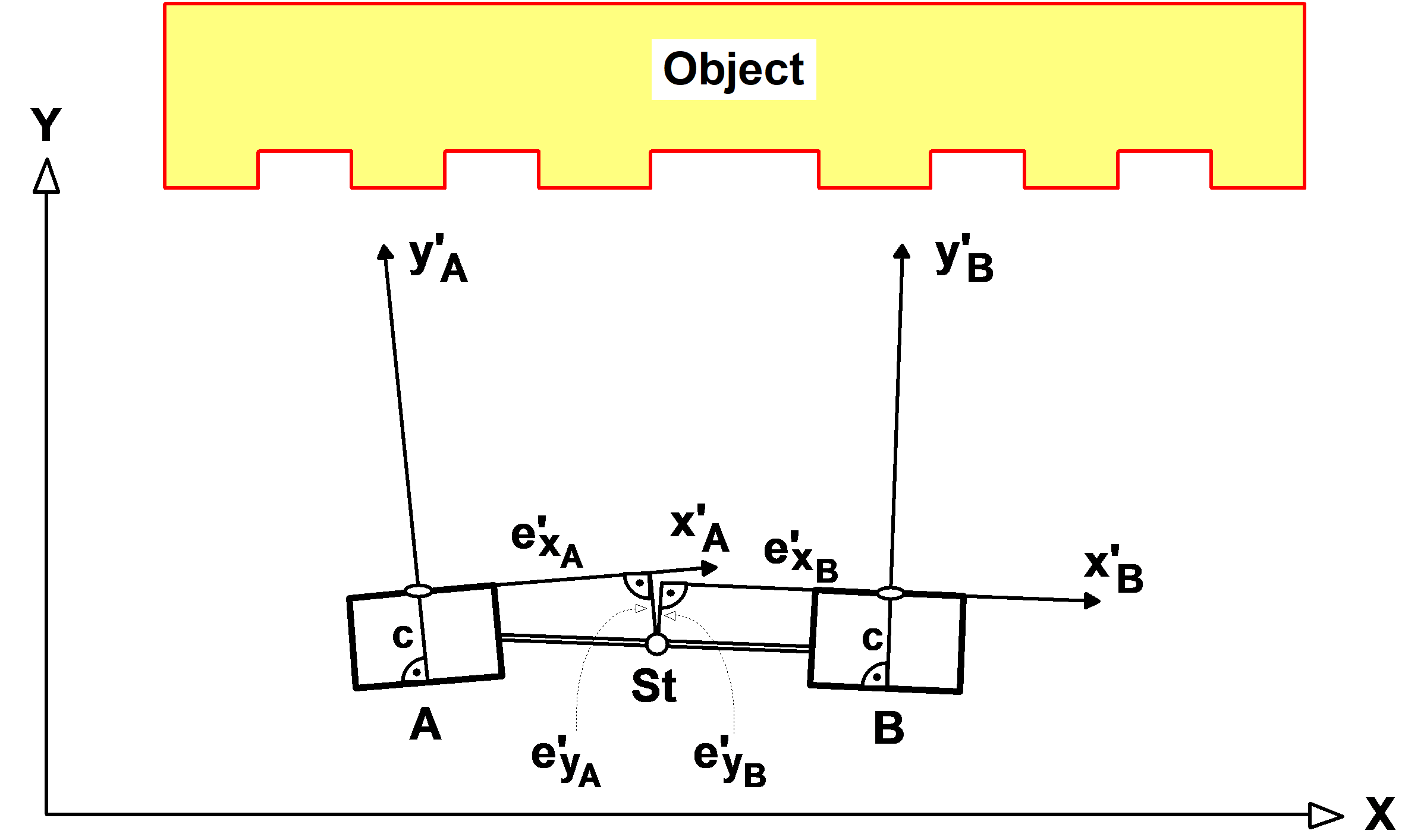
Fig. 2.1.2-6 Imaging with stereo metric camera
If possible e' and the differential rotation delta should be used as observed unknowns. In doing so, a standard deviation has to be given which corresponds to the accuracy of the existing input data.
As the geometry of a stereo metric camera on principle only requires a constant stereo base b'=e'A - e'B , the unknowns e'A and e'B can only be separated if, in addition to the stereo metric camera conditions, additional information is available, such as
- calibration measurements (e.g. from simultaneous calibration) and
- several photos in different directions from the station.
Otherwise, for one of the two cameras e' must be maintained with approximate values in order to avoid defective systems (e.g.: e'A= 0).
To justify equation (2.1.2/3), the relative orientation of the cameras must remain constant. Therefore, great importance has to be attached to simultaneous release of both exposures.
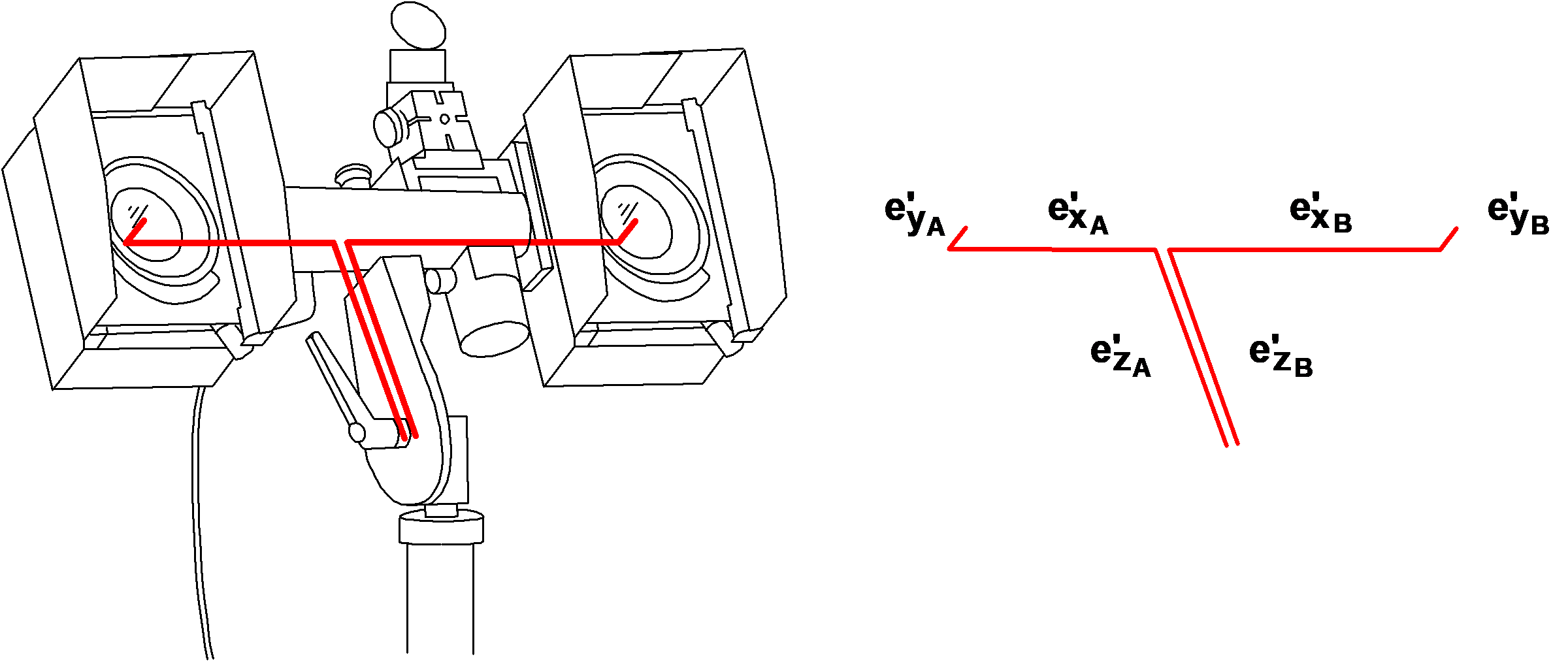
Fig. 2.1.2-7 ZEISS SMK 40
As an example of a stereo metric camera Fig. 2.1.2-7 shows the ZEISS SMK 40. The eccentricity vectors have the following values:
e'A = (+0.2000, -0.0205, -0.1375)
e'B = (-0.2000, -0.0205, -0.1375)
For application in BINGO, the above-mentioned condition equations have been formulated as observation equations. The weight function for the 3 independent equations is to be calculated from the given a priori standard deviations which represent the camera stability.