2.1.2.1 Centring on fixed terrestrial image station
If several photos are taken from a fixed camera station (tripod), these photos have a fixed mutual rotation centre, even if the exposure directions are different. Such information can be introduced with advantage into the adjustment. The station may be any object point, which may be connected to other points by survey measurements, and can also appear in other photos. If only one photo is taken at a station, the relation between rotation centre and station point is only useful if the station does appear in another photo or is connected to other object points by survey measurements or if it is a control point.
The relation between the projection centre and the station point is:

XST :position vector of image station
i :height of rotation centre above the station point (0, 0, i)
X0 :position vector of projection centre
R :rotational matrix 
e' :position vector of rotation centre, defined in the image space;
i.e.: vector from the exterior projection centre (Nodal point) to the rotation centre.
The following cameras shown below are no longer very up-to-date but with their various different designs they are nonetheless exemplary for modern digital cameras.
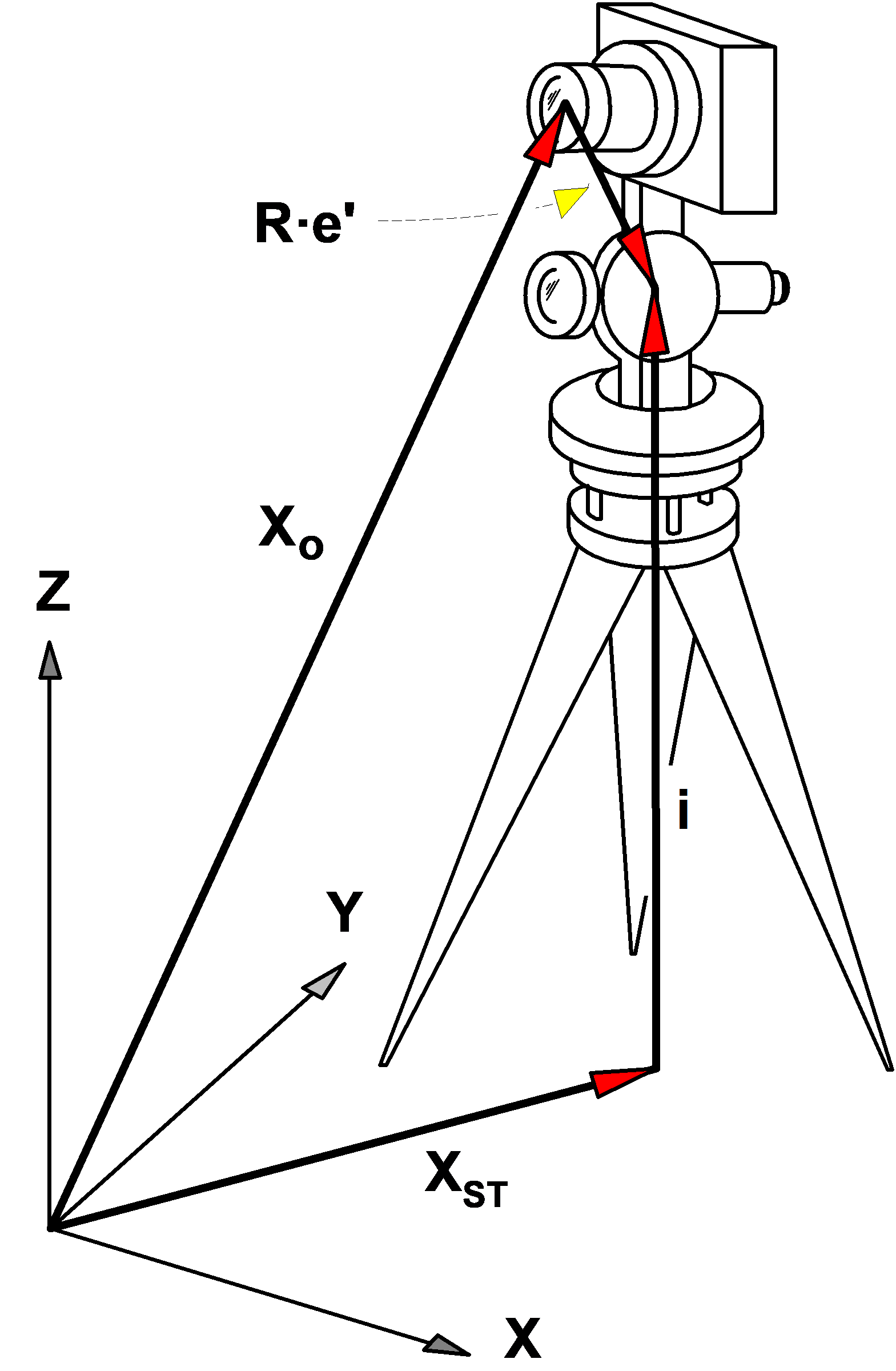
Fig. 2.1.2-1 Exposure at an image station
The intersection of the rotational axis (XST + i) is connected to the projection centre by the eccentricity vector e'. As e' is defined in the image space, it is transformed into the object space by the matrix R.
Please note: The unit of measure of vector e' is the unit of measure from object space.
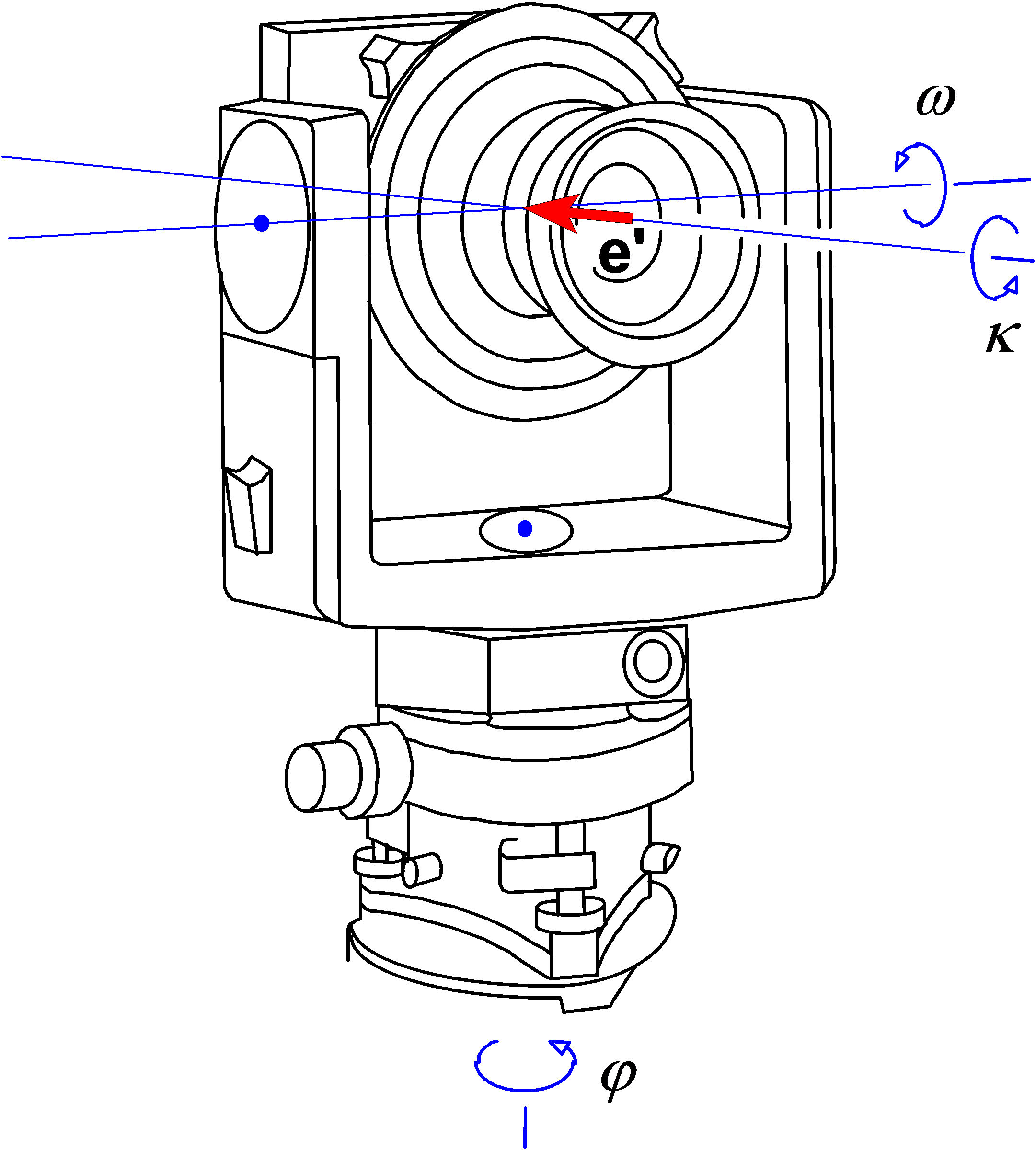
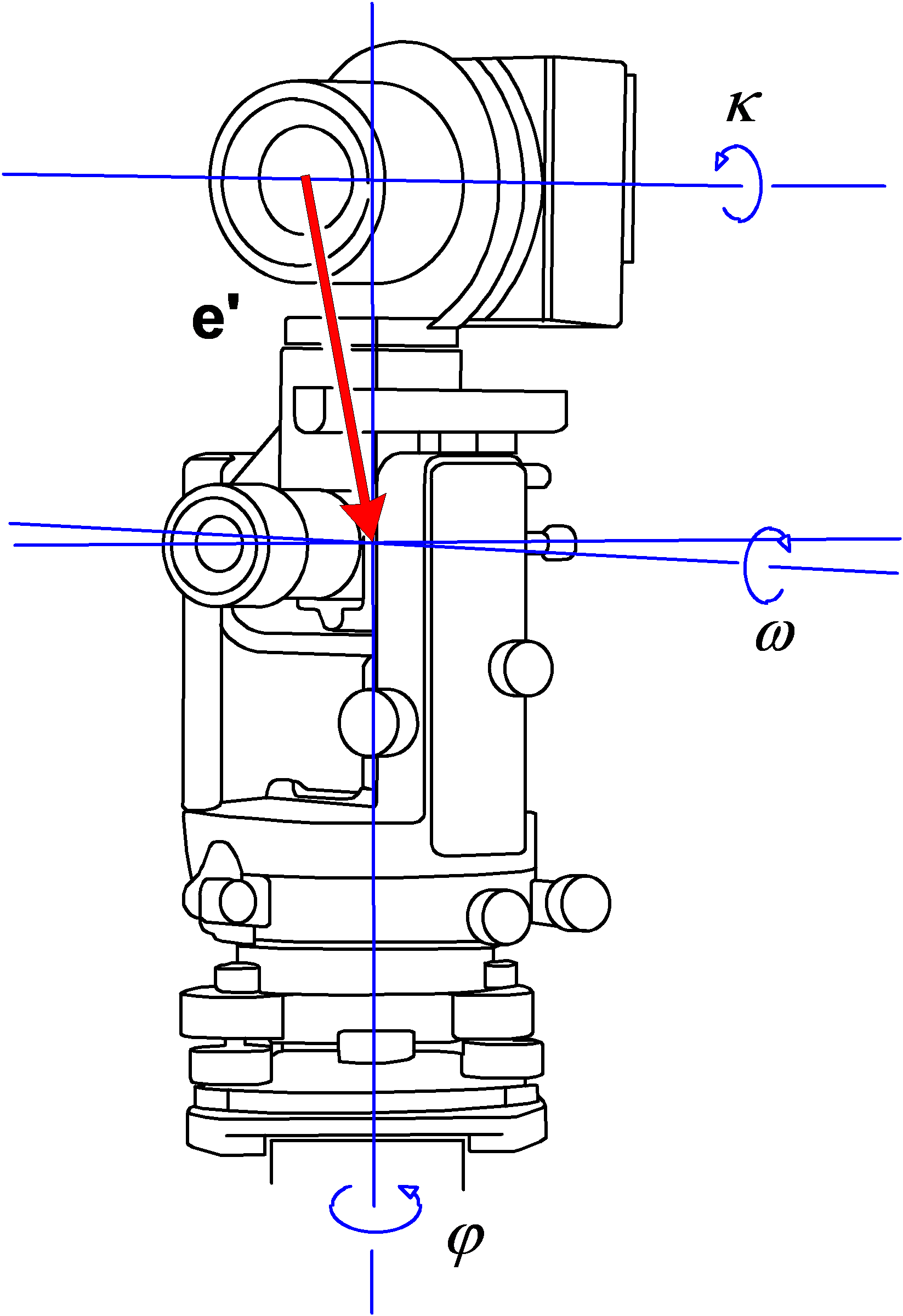
Fig. 2.1.2-2 WILD terrestrial cameras P31 and P32.
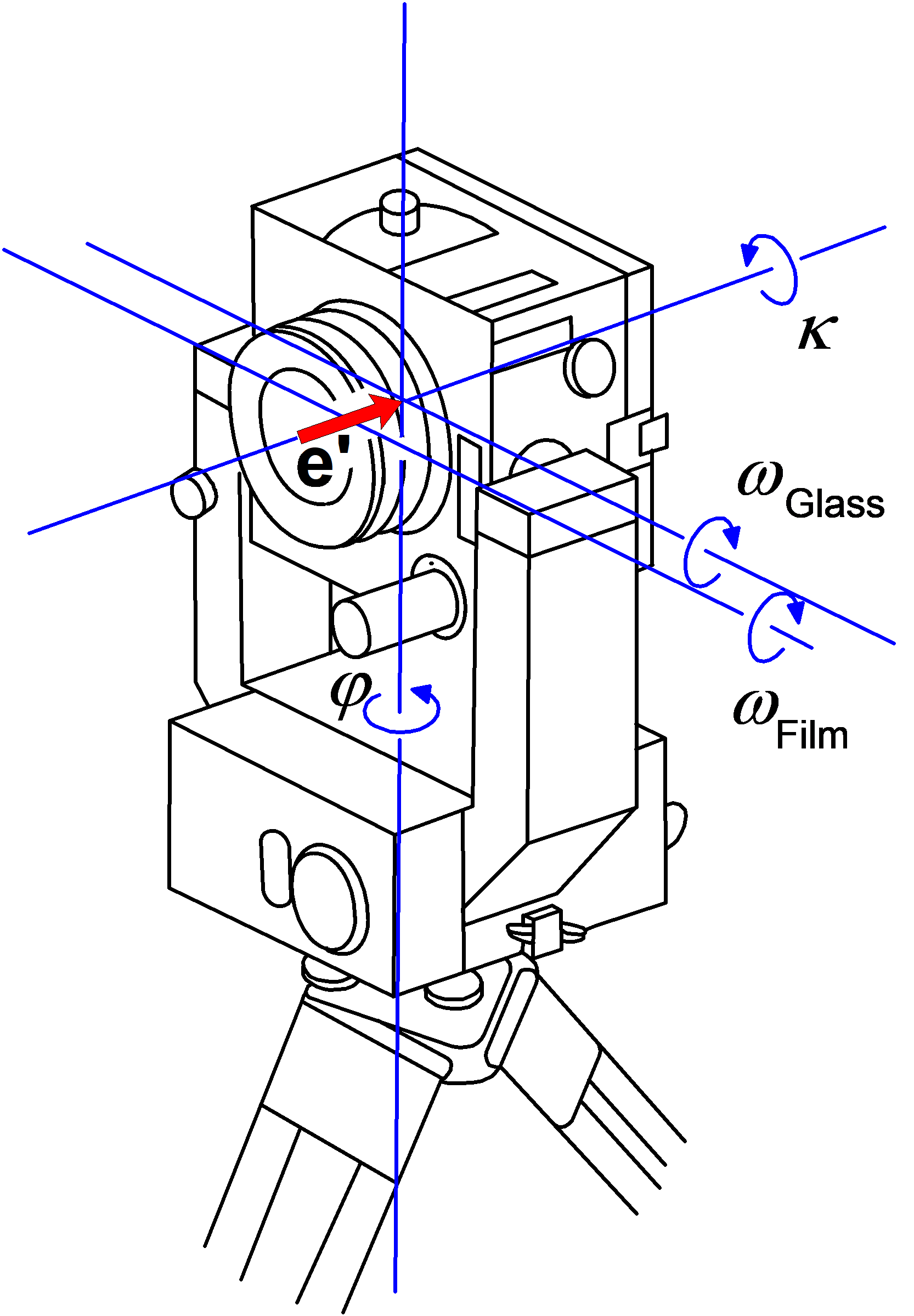
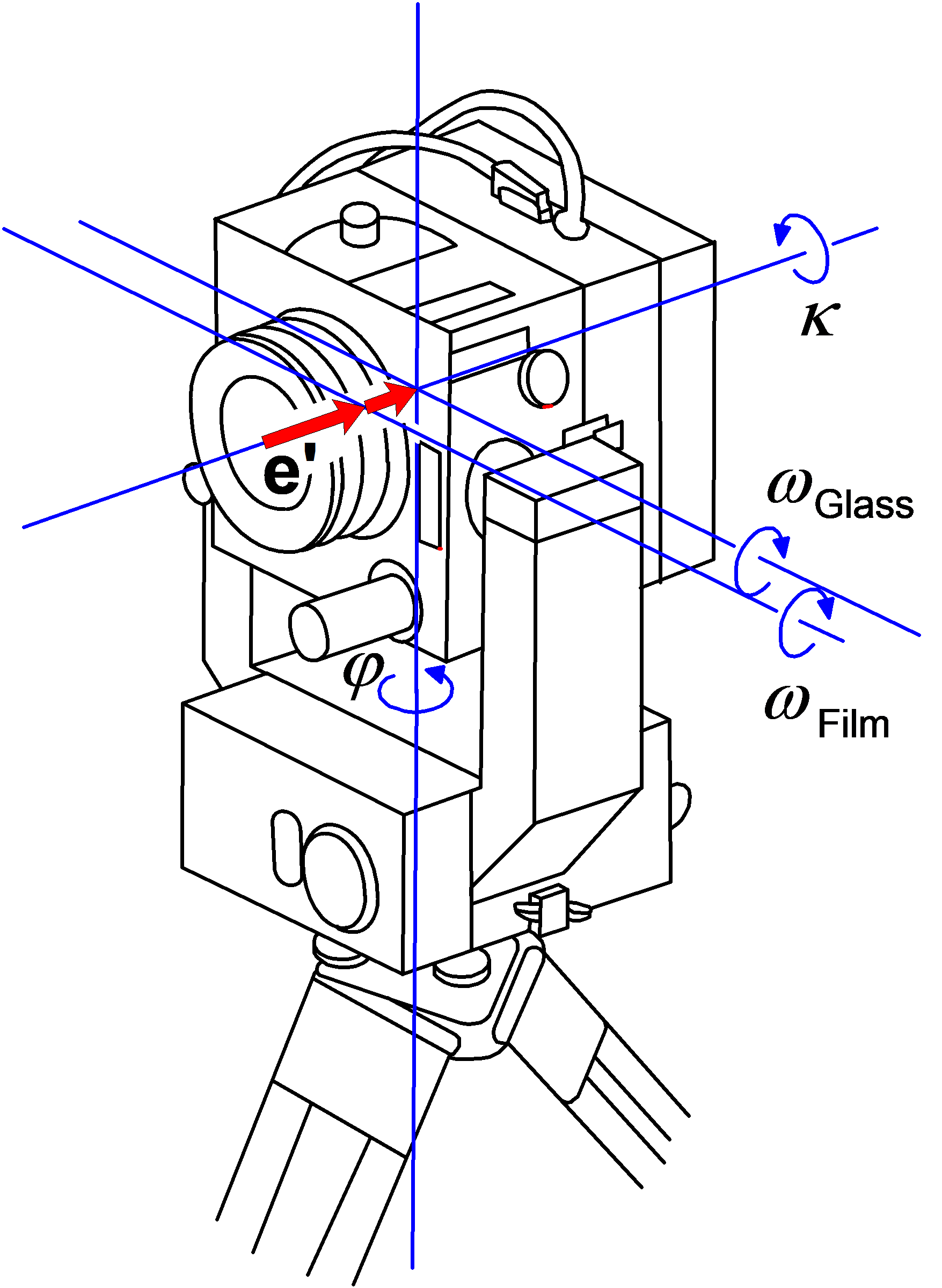
Fig. 2.1.2-3 UMK 10-13/18 with glass plate / with film cartridge
Vector e' is normally described by:
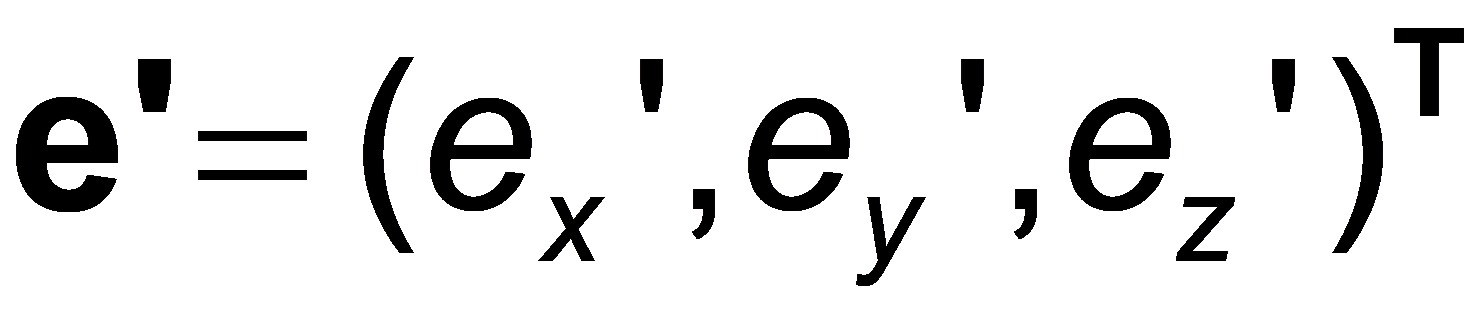
i.e. all vector components are non-zero. For most cameras, however, one or two components of e' are zero or nearly zero. For the three cameras described here the following values are valid:
| P31 : | 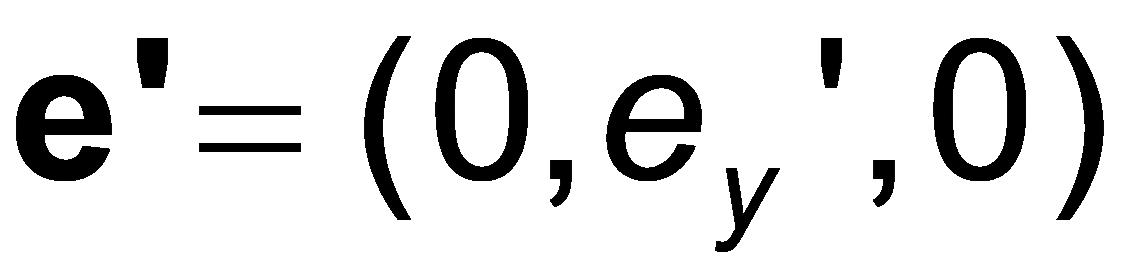 |
| P32 : | 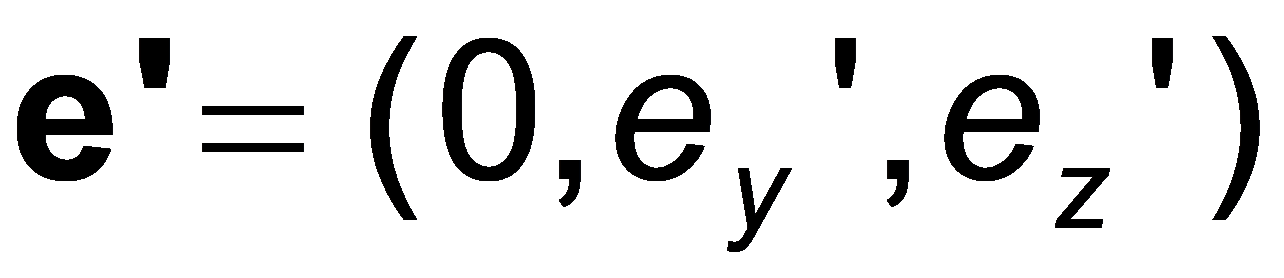 |
| UMK : | 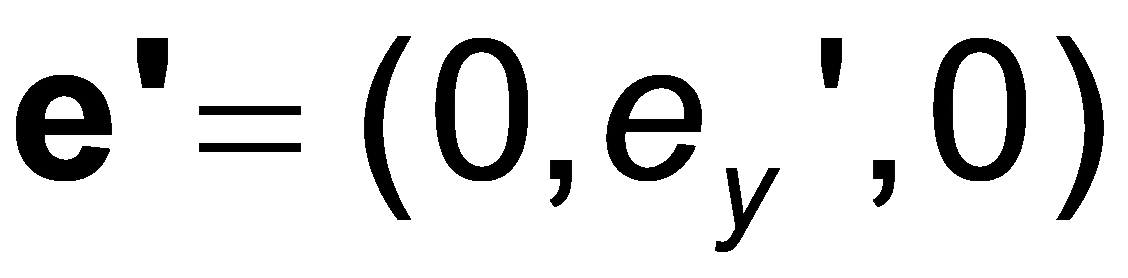 . . |
The component ey' is negative in all three cases because the image coordinate system has its origin in the projection centre and the positive y'-axis points towards the exposure direction. In the P32, ez' also is negative. For the focusable UMK, ey' is a function of the image distance.
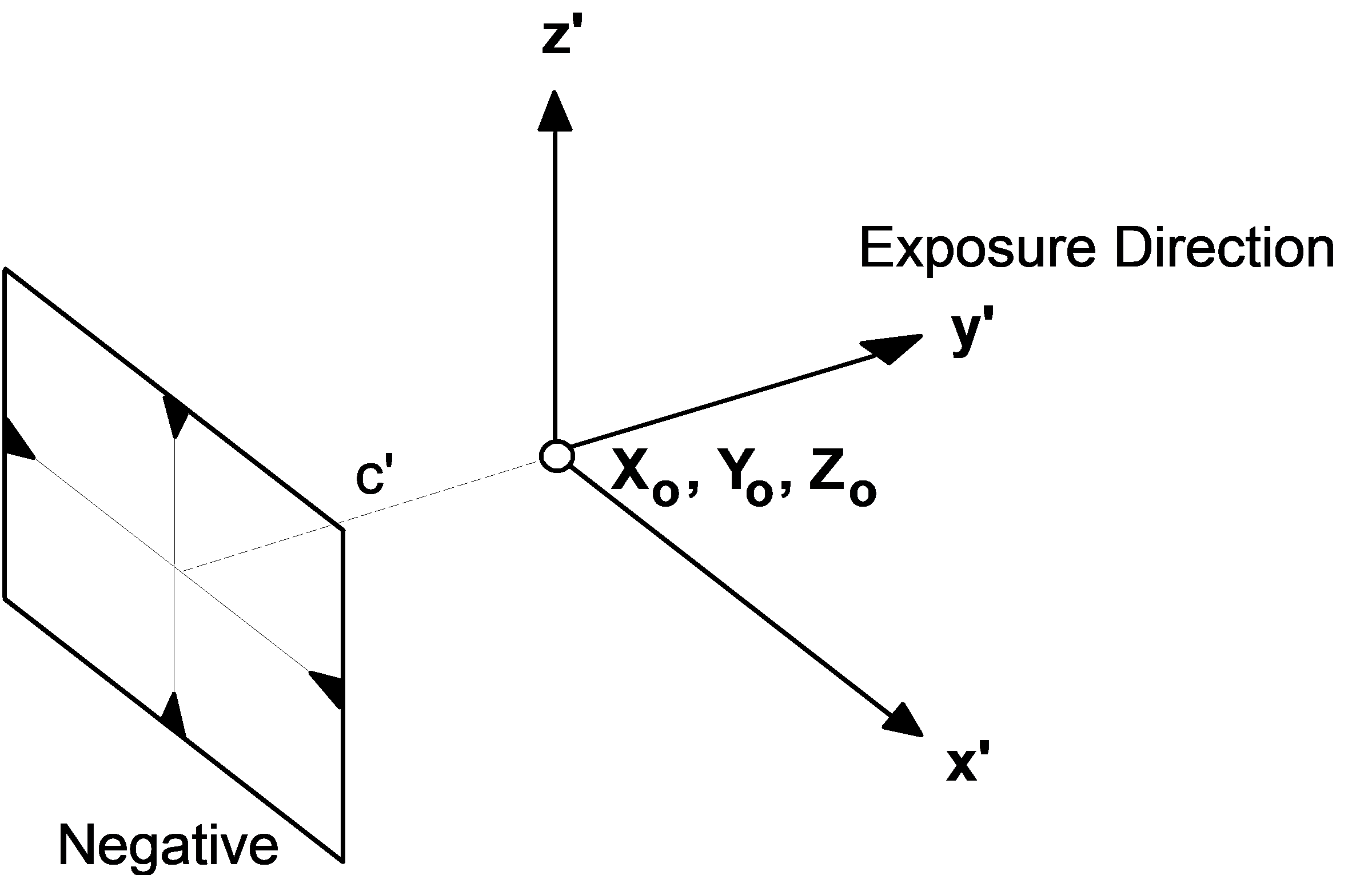
Fig. 2.1.2-4 Photo coordinates for terrestrial photo
The vector e' can be introduced by program BINGO as an additional unknown in the adjustment for the camera in use. The value of vector e' will be known, at least approximately. The approximate values have to be indicated, otherwise e'=0. It is, however, more convenient to introduce e' as an observed unknown. See: Data of camera calibration (see also Section 2.1.5).
It is a prerequisite for a function according to equation (2.1.2/1) that the mechanical rotation axes of the camera intersect in a fixed point for rotations ϕ, ω and κ. These conditions are fulfilled for both the WILD P31 and WILD P32. For the UMK they are fulfilled only if the camera body is mounted in the bearing intended for use when glass-plate negatives are used.
When the rotational axes do not intersect in a fixed point, the user himself has decide himself, whether the vector e' always shows from the projection centre onto a fixed point on the ϕ axis.
This means in practice for exposures with the Wild P32 that only pictures with an identical κ angle can be connected according to 2.1.2/1 to the station point. I.e. no rotations around the κ axis are allowed between the exposures as the vector e' does not show to the same point after such a rotation.
These conditions are formulated as three separate observation equations, namely for x, y and z. The weight depends on the a priori standard deviation which has to be defined by the user in the three components. These standard deviations may also be interpreted as the positional stability of the camera axes on the tripod. As experience shows, this stability depends on the camera weight and the quality of the tripod approximately 0.2 to 0.6 mm.