2.1.1 Image measurements
The photographic imaging of an object into a picture (central perspective) is describes by the collinearity equation

where:
X :ground coordinates of an object point
X0 :coordinates of the projection centre
λ :a scale factor, which differs for each point
R :orthogonal rotational matrix from the object to the image space
x' :image coordinates of the illustrated point, defined in the image space
xH' :the coordinates of the principal point (PPA) related to the symmetry point (PPS)
or for digital images to the image centre.
The matrix R is established for rotations about rotated axes. For rotation sequence ϕ ω κ is selected here.
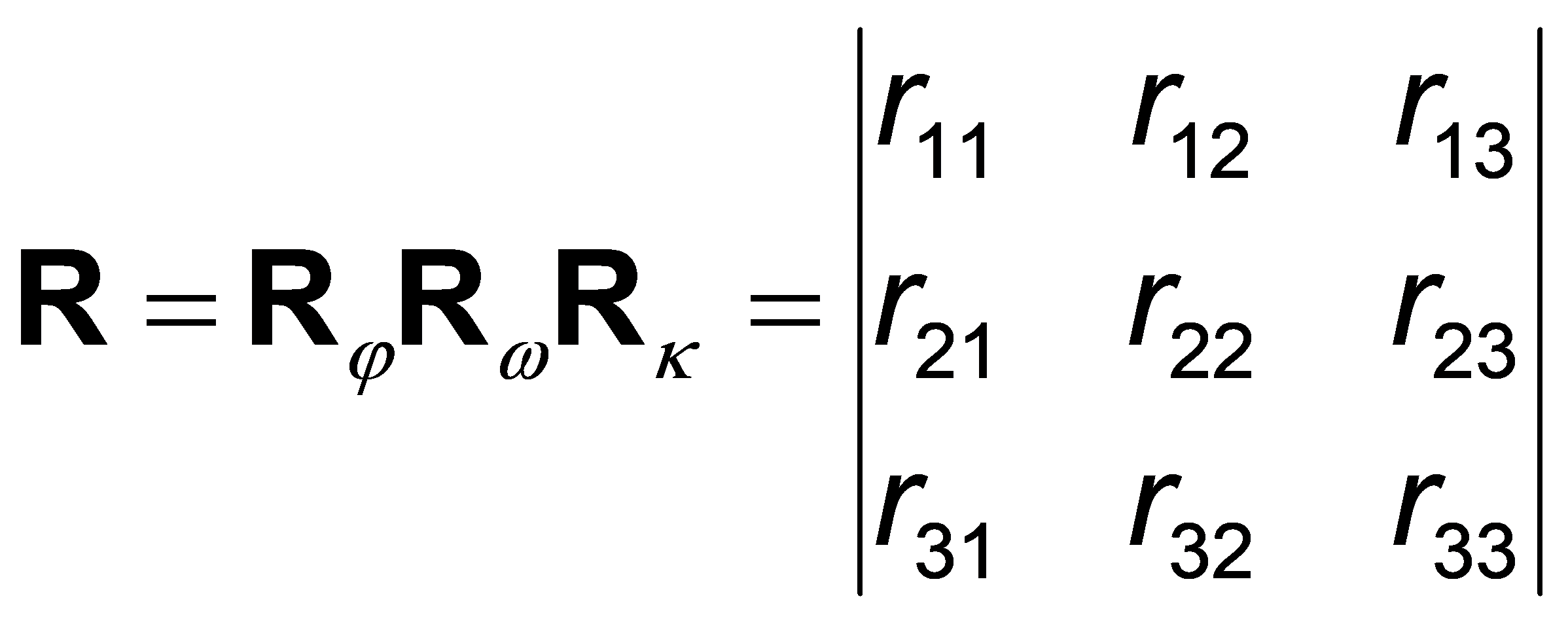
Vector xH' includes as fixed component the camera constant c. The collinearity equation thereby describes a non-reversible conversion even at a known orientation of the three-dimensional object space into the two-dimensional image space. Object-point coordinates can therefore only be determined from image measurements if the points have been defined in at least two images of different perspective.
For combined adjustment of object points and orientation parameters of a bundle block, equation (2.1.1/1) is transformed to

and for the adjustment it is linearised to a Taylor series.
The angles of rotation in the order ϕ ω κ are defined as "Euler-angles", i.e.: A positive rotation is anti-clockwise when looking from the positive directions of the rotational axis.
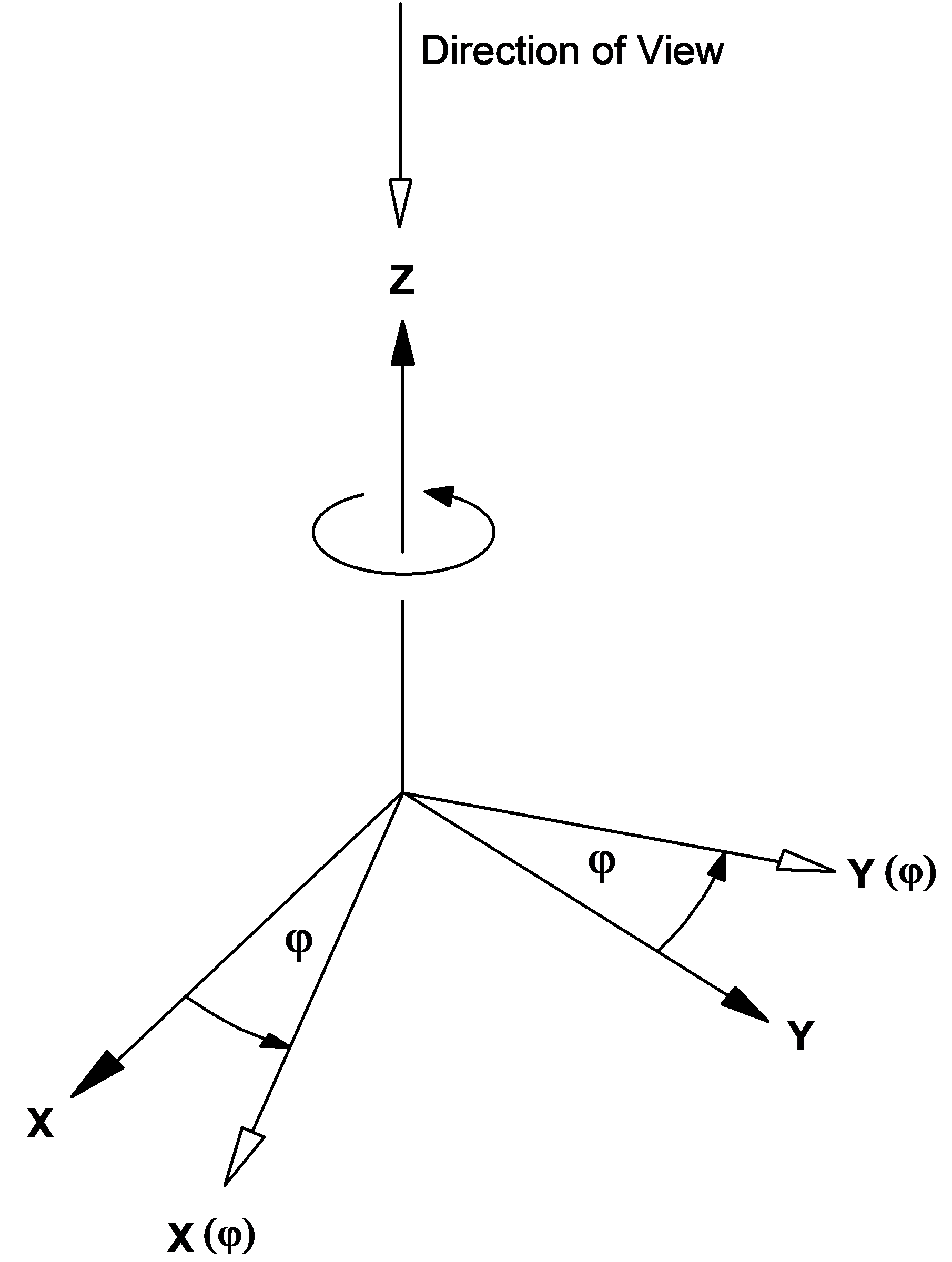
Fig. 2.1.1-1 Definition of rotation directions
The matrix R can never become singularly because it is an orthogonal matrix, i.e. the inverse is defined by R-1 = RT. With an angle definition according to 2.1.1/2, the second rotational angle, i.e. ω, gets singularly, if it approaches to a right angle. Therefore not every spatial direction possible can be described by one angle system according to 2.1.1/2. This problem can be avoided by using different rotation angles for aerial photos with vertical exposure axis and terrestrial photos, preferably with horizontal directions.
This selection is automatically effected by the program RELAX during the estimation of the initial approximations and can be influenced only limited directly by the user. This method carries two advantages:
- Singularities of the rotational angles are automatically avoided.
- For both aerial and terrestrial photo applications vivid angle data are received (see next Chapter).
Please note: There is only one rotational matrix for a given photo. The matrix is independently from their parameterisation ϕ ω κ, ω ϕ κ or Rodrigues parameters. The values in the matrix are always the same! To convert from one parameter set to another set, the rotational matrix has to be computed first. In a second step the new parameters can be calculated from the rotational matrix. Compare next two sections.