2.4.1 Automatic removal of rank defects
Unsatisfactory network configurations or missing datum determinations may lead to defective normal-equation systems which do not reach full rank. For such cases, appropriate activities have to be carried out, for solving the equation system nevertheless. As no clear solution exists, an arbitrary free inverse may be defined without influencing the inner geometry of the network.
The normal equation 2.4/1 is transformed to

with
 ; (I : Identity matrix)
and 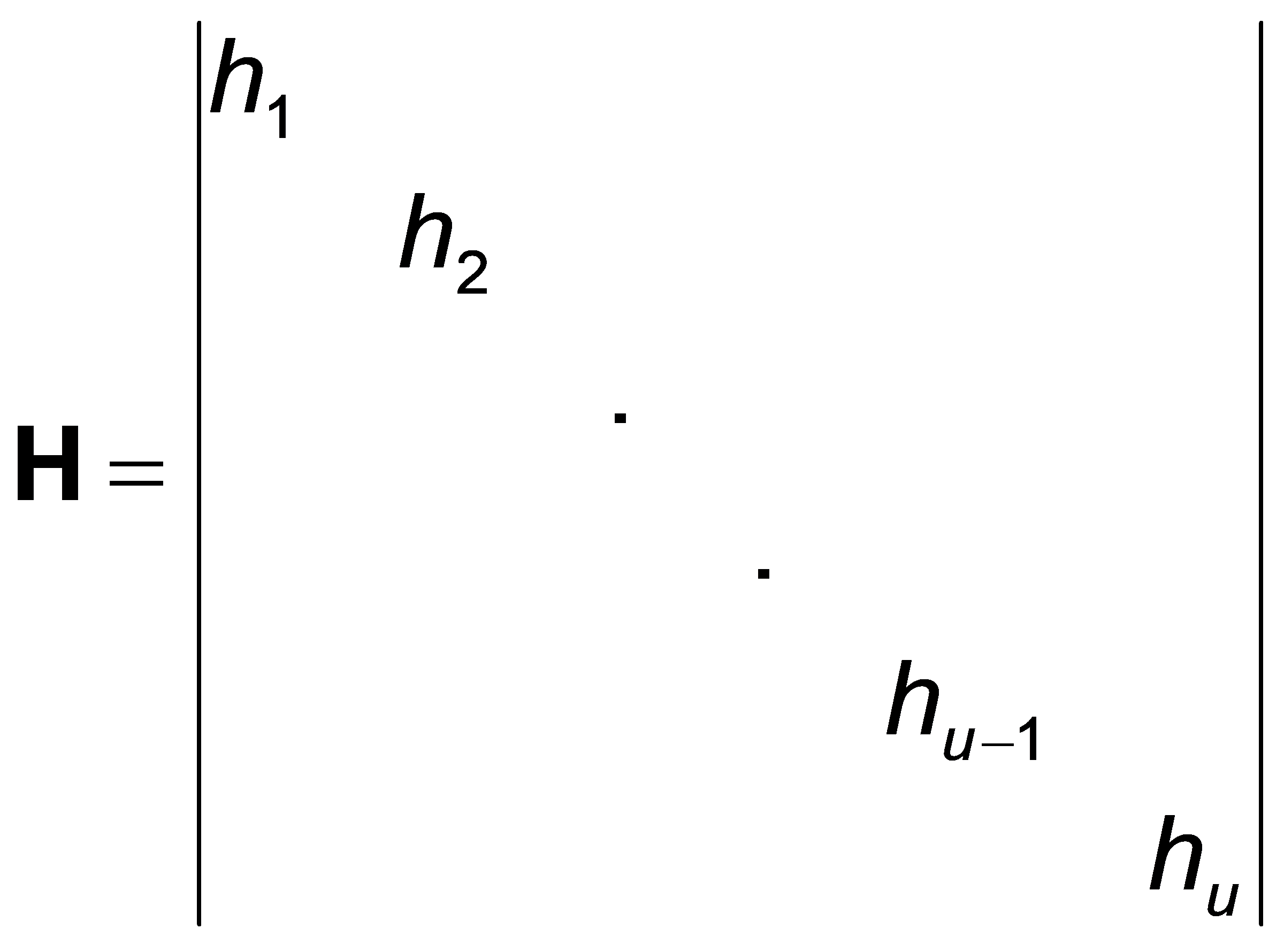
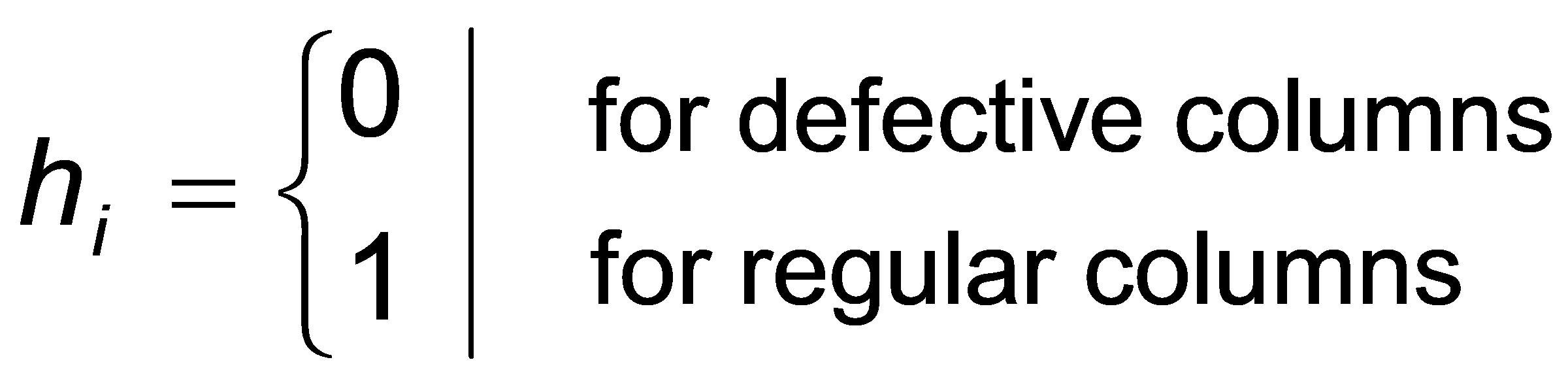
In principle, this is an auxiliary release which allows identification of all potentially existing rank defects in just one step. The program provides detailed information about the detected defects. Such a solution however is not appropriate in terms of a final equation result.
This procedure is equivalent to transformation of the network to the approximate values of the non-definable unknowns. The inner geometry of the network will not be affected. The geometry is equivalent to that which can be achieved by free network adjustment with minimum trace or with partial trace minimisation.
Differences only occur regarding position of the network and the magnitude of standard deviations of the unknowns. Defective unknowns will obtain a standard deviation of zero. The method is advantageous, however, as every defect can be eliminated, no matter whether it is a defective datum or a local configuration defect.
The datum should either be defined by appropriate observations or the free network adjustment should be used.
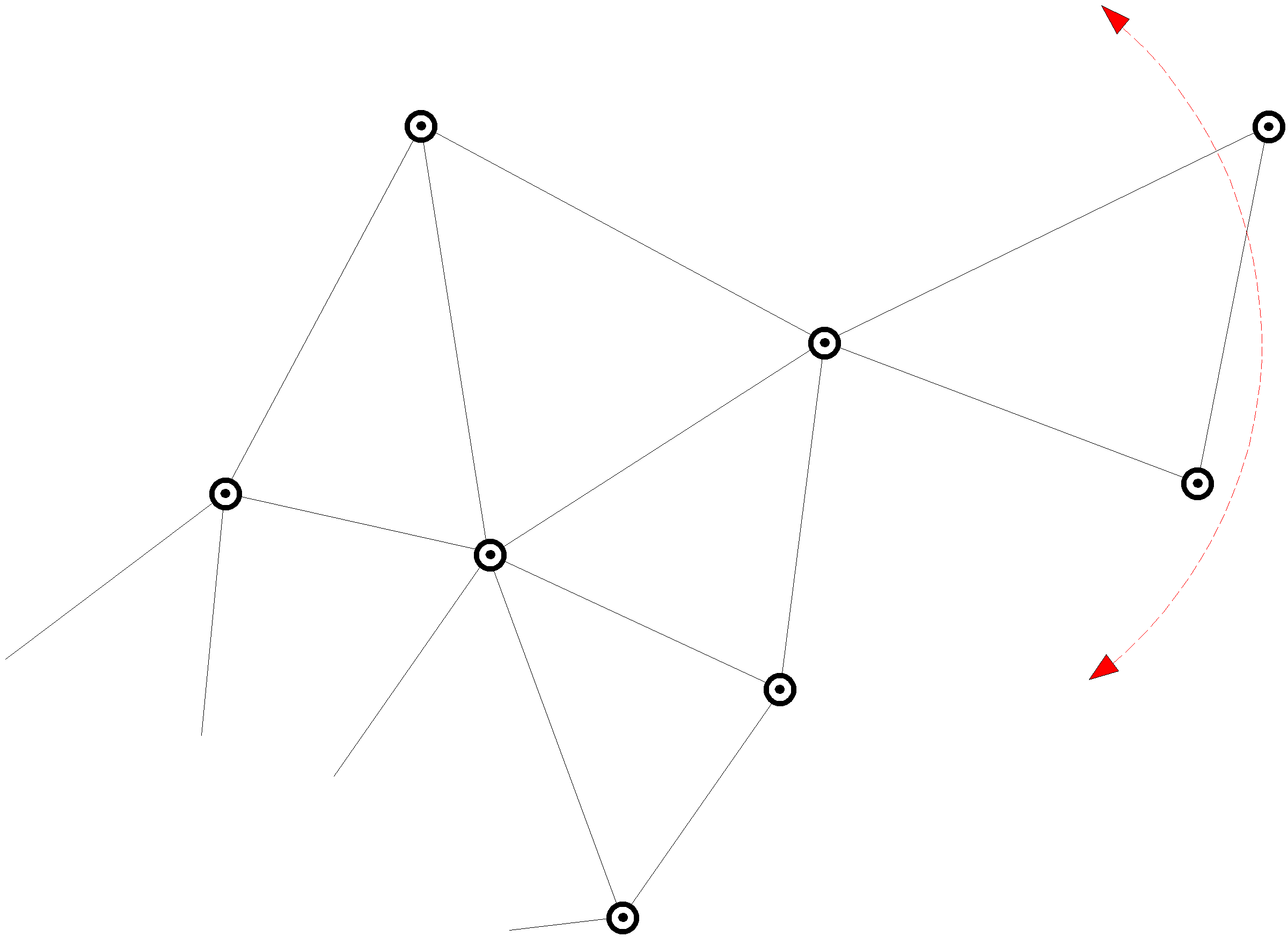
Fig. 2.4.1-1 Local configuration defect
The seven datum parameters of a network (3 translations, 3 rotations and the scale) can appear as defects either together or separately in various combinations. Determination of the datum parameters can be effected by appropriate observations:
- By means of a distance measurement for the scale.
- The three rotations of the network can be defined by means of observations such as azimuths, zenith distances, coordinate differences (including height differences), and in some cases sets of directions.
- The three translations can only be defined by a control point...
Of course, all seven datum parameters may also be established by control points only.
Numeric problems may arise with minimum positioning information for a network despite clear definition of all values, so that the iterations do not converge. It is then generally recommended either to define the datum parameters by two or better three control points well distributed at the edges of the network, or to use the free network adjustment.
If the datum parameters are not defined, a required positioning can be performed by means of a transformation following the adjustment (program HEL3D).