ORIA, ORIT Approximate values of the exterior orientation
Columns | format | contents/explanation |
|---|---|---|
1-4 | A4 | ORIA for aerial photos |
5-20 | A16 | Photo name |
21-34 | F14.0 | X :EastingY :NorthingZ :Height |
60-69 | F10.0 | ϕ :Primary angle of rotationω :Secondary angle of rotationκ :Tertiary angle of rotation |
In general it is not necessary to enter the ORIA and ORIT statements manually because the initial approximations of orientation data will be created by the program RELAX and passed on to BINGO in the ITERA file. If this is not the case, just for once, the angles of rotation ϕ, ω and κ must be defined for ORIA according to Section 2.1.1.1 for aerial photos; for ORIT according to Section 2.1.1.2 for terrestrial photos. A range of values from -400 to +400 gon is acceptable for the angles ϕ and κ. The angle ω must not differ from the defined zero direction by a right angle, otherwise ϕ is highly correlated with κ and the normal equation matrix becomes singular. A safety interval of approximately ±5 gon from this right angle then must be considered (see hatched areas in Fig. 5.7-1). A positive, i.e. a paper copy or dia-positive is always necessary to find the approximate values of orientation.
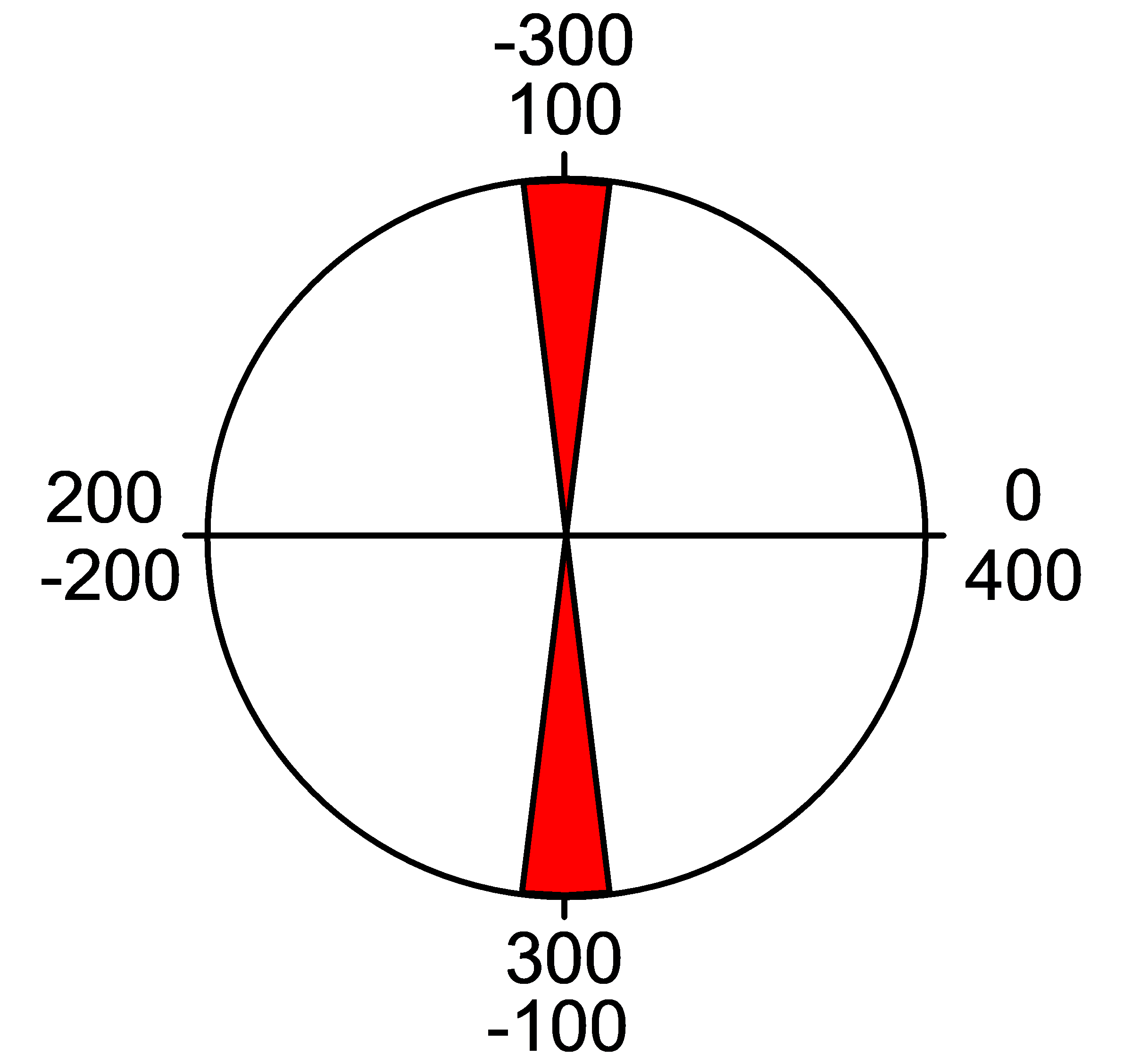
Fig. 5.7-1 Range of values for angle ω.
Sometimes the determination of initial approximations will not be given by RELAX but manually. To facilitate determination of the angles of rotation in these cases, it is advantageous to produce a rough plan of the photo stations. Then the photos can be shown and the approximate values for the projection centres and the exposure directions can be measured graphically. The following figures will show some examples.
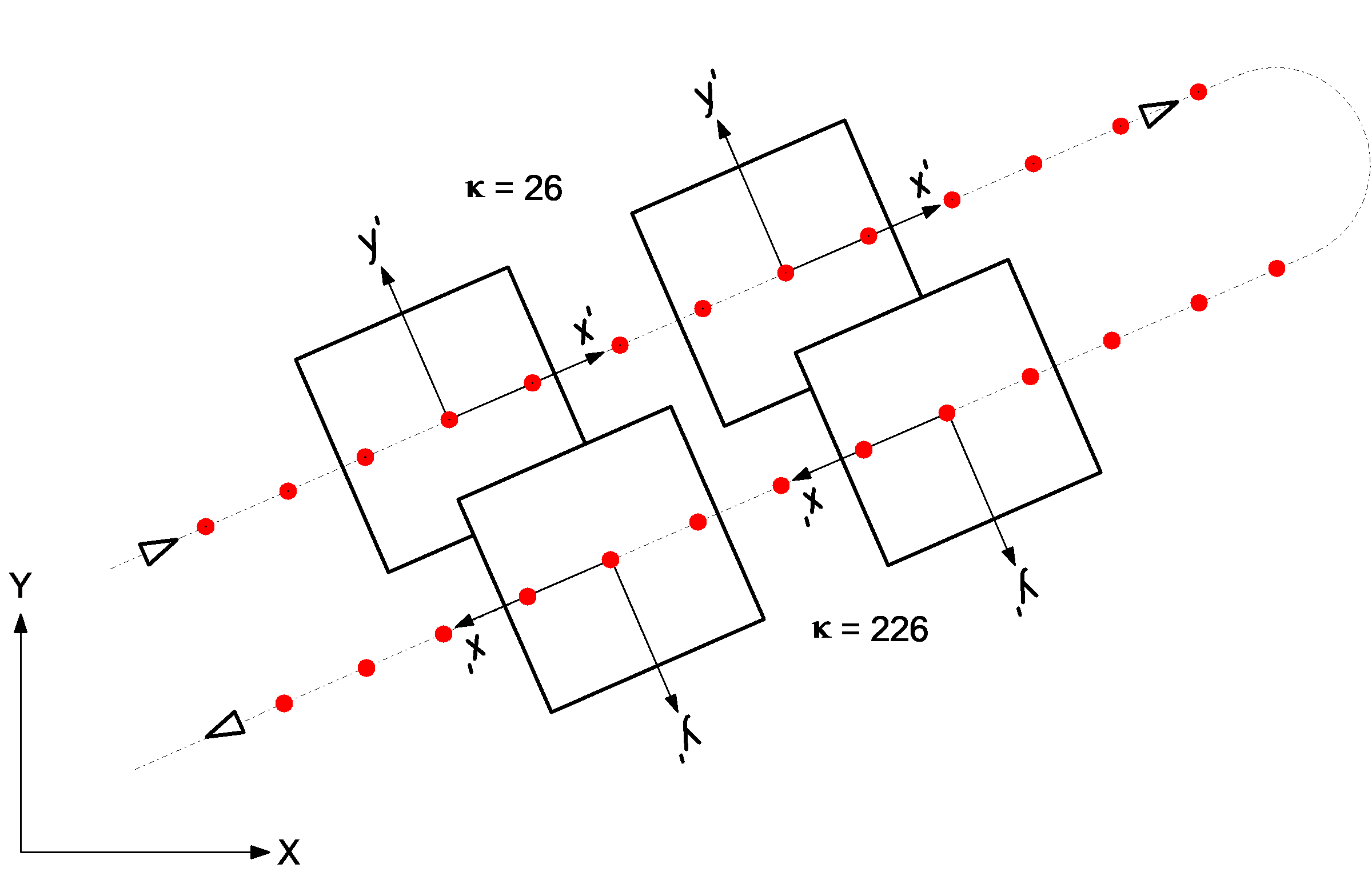
Fig. 5.7-2 Plan of the layout, aerial photographs.
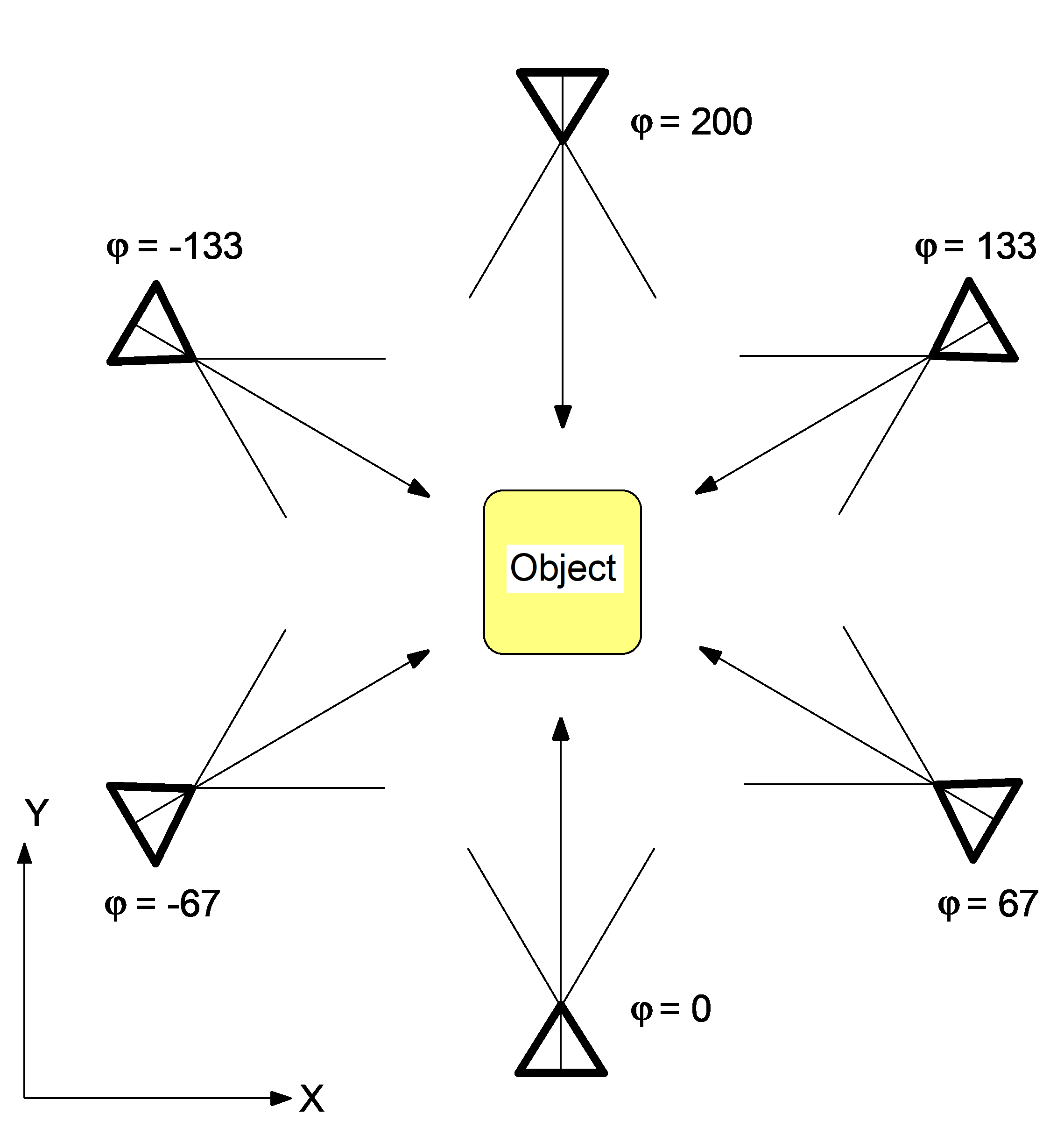
Fig. 5.7-3 Plan of the layout, terrestrial photographs
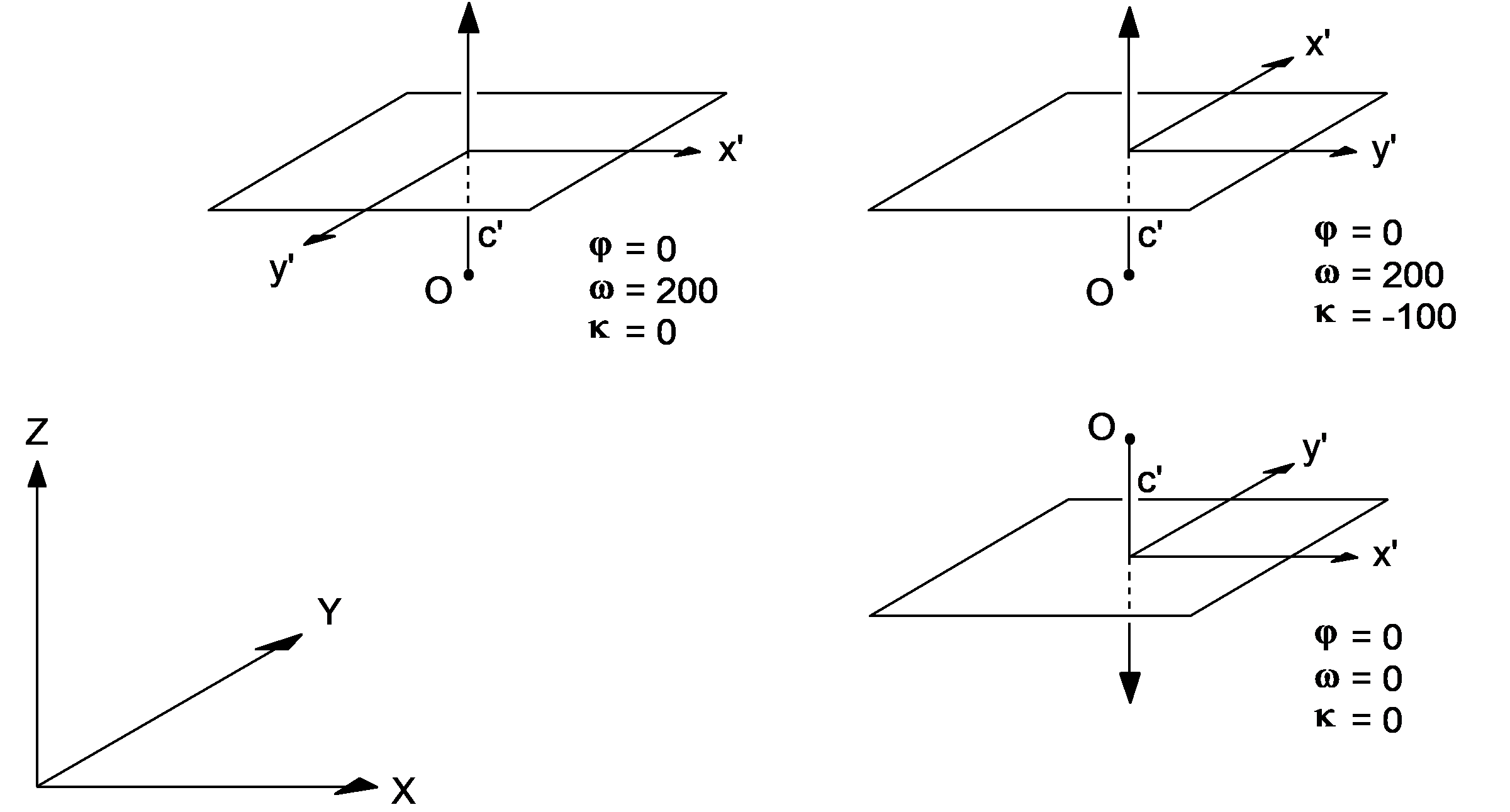
Fig. 5.7-4 Orientation angles for zenith photographs (similar to aerial photo arrangement).